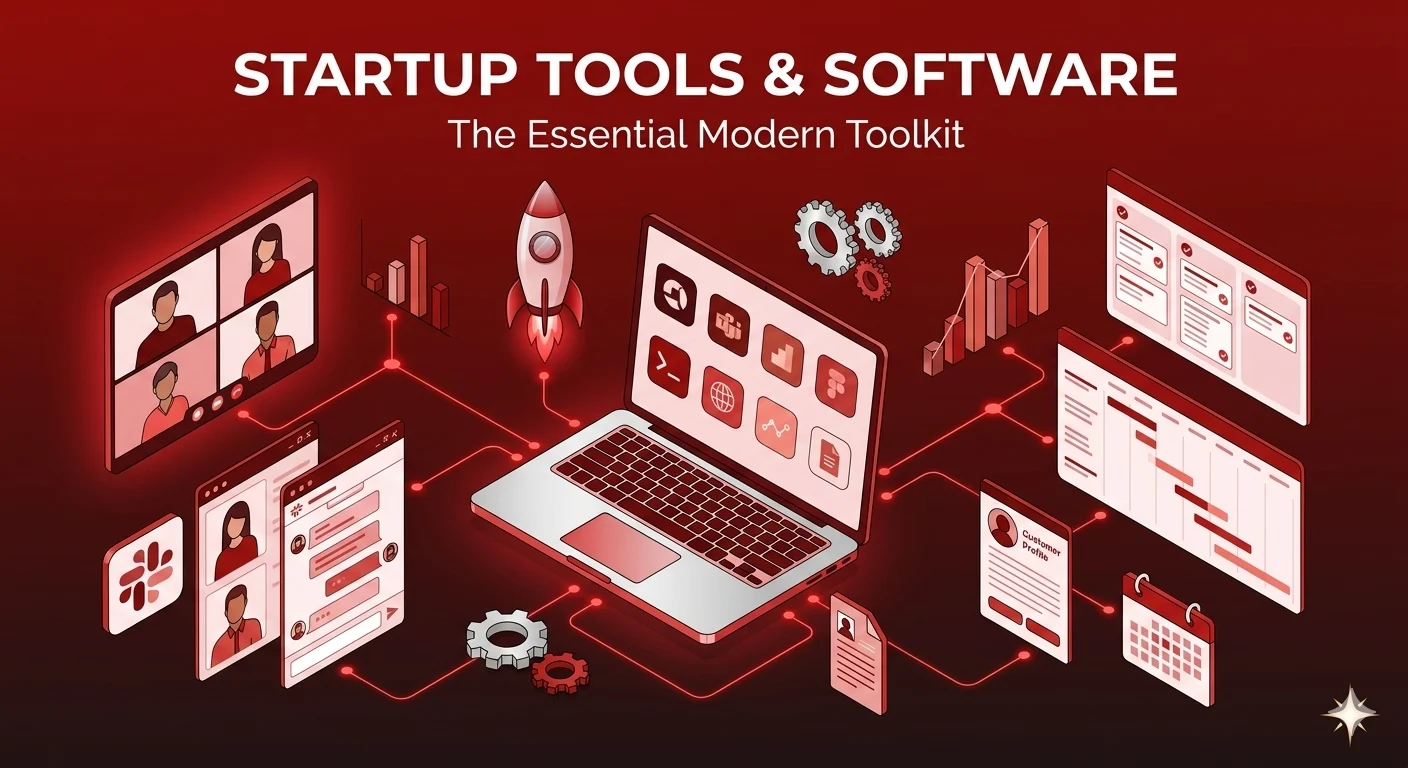
A new business that is going to begin in 2026 is both exciting and challenging. The question all the owners of startups ask is: What tools can I use to operate my business easily? The positive thing is that nowadays numerous Essential Startup Tools and Software can help you to talk to your team, as well as process customer payments. The small businesses previously had to acquire costly software using a huge budget. Today, things are different. The majority of Essential Startup Tools and Software provide free plans or have low costs that are within the tight startup budgets. These programs will assist you in working quickly, getting organised and expanding your company without having to hire a big team.
This paper will take you through the 10 best startup tools and Software that every new company will require in 2026. These tools will simplify your daily work regardless of whether you are working alone or with a small team. Some tools to be discussed include team communication, project management, marketing, money management and automation. The end of this guide will see you being certain about which best startup tools 2026 to use in your startup.
What to Look for in the Essential Startup Tools and Software
1. Lightweight: The tool must not be technical or need some training.
2. Free or Low Cost: Find tools with a free level with small teams.
3. Scales With Your Company: The software can support an increased number of users within your company.
4. Compatible with Other Tools: Integration with the existing apps saves time and reduces errors.
5. Good Customer Support: Support must be provided in case of technical issues.
Key Features to Look for in Essential Startup Tools and Software
On top of necessities, some of the features render Essential Startup Tools and Software of real value to startups:
1. Anywhere Access with a Cloud: Work everywhere, provided that the internet connection is available.
2. Collaboration Features: It allows collaborative work of several team members on the same tasks.
3. Repetitive Tasks: Save Hours: Work on the data entry work that should be automated.
4. Mobile Applications On-the-Go: Track business on your mobile phone when you are on the move or commuting.
5. Security and Data Protection: Your business data is kept securely with encryption and backups.
Explore More Reading: Top Data Analytics Courses in Delhi
Top 10 Essential Startup Tools and Software in 2026
1. Slack
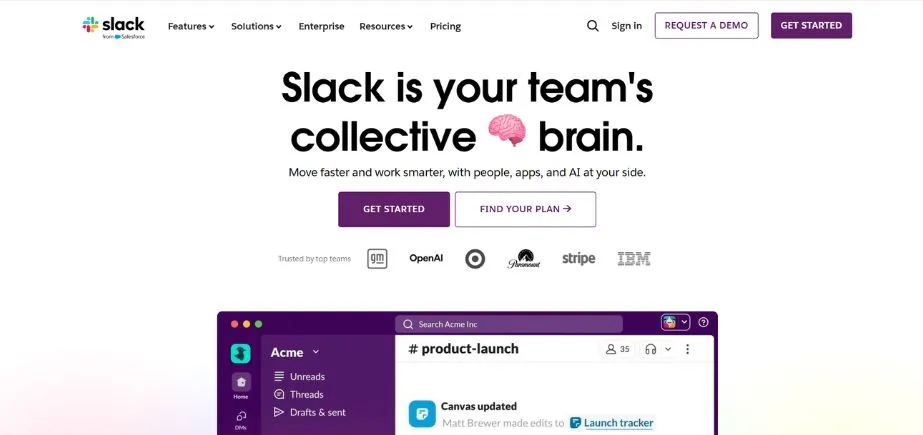
Slack is a group chat application which has made its way to be one of the most used Essential Startup Tools and Software globally. Slack is used by more than 38 million individuals as the application that enables teams to communicate in real-time by use of channels, direct messages, and group chats. Rather than having to have interminable email chains, Slack puts all the discussions in a single place. It is possible to establish various channels of projects, departments, or topics. The platform is also interconnected with hundreds of other applications, which creates a hub for the communication of startups.
Key Features
- Structured intergroup systems of teams and projects.
- Chat instantly individually and in groups.
- Plugging in with more than 2,000 business apps.
Pros
- Extremely simple to use at once.
- Free is suitable when working in a small team.
- Strong search notifies old messages swiftly.
Cons
- Limits message history on the free plan.
- A lot of channels are confusing.
- Alerts have the potential to break concentration.
Best For: Communication
Pricing: Free plan available; Paid plans start at $7.25 per user per month
Website: https://slack.com
2. Zoom
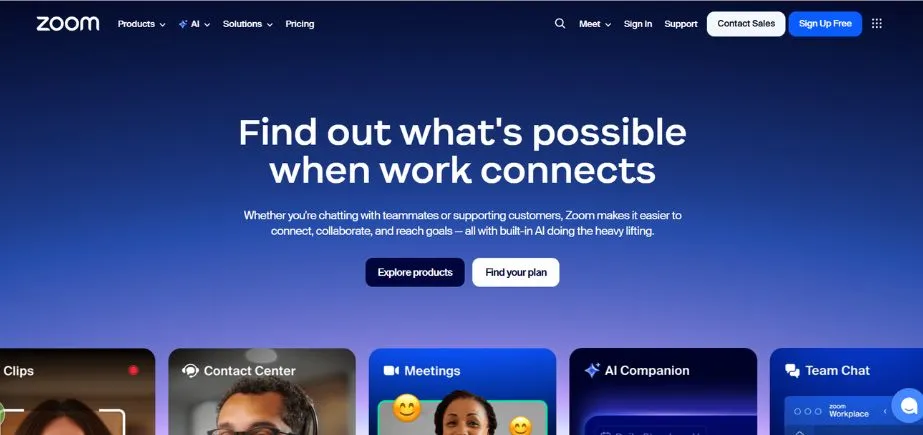
The most popular video conferencing service and an indispensable item of any tools that every startup must have is Zoom. After remote work has become the new norm, millions of businesses have been able to conduct virtual meetings, webinars, and presentations using Zoom. The platform provides video and audio of high quality, screen sharing, and recording. In the case of Zoom, the free version also enables meetings lasting at least 40 minutes with a maximum of 100 members, a feature that most startup meetings can afford. The paid plans have no time constraints and include an additional option of cloud recording and an increased number of participants.
Key Features
- Video and audio calls of high quality.
- Virtual backgrounds and screen sharing are present.
- Meeting features of recording and transcript generation.
Pros
- Extremely stable and fewer technical problems.
- Easy-to-use interface at all levels.
- Functions in any devices and platforms.
Cons
- Complimentary thirty-minute meetings.
- Can use considerable internet bandwidth.
- The early versions used security concerns which are now resolved.
Best For: Meetings
Pricing: Free plan available; Paid plans start at $14.99 per month per license
Website: https://zoom.us
3. Trello
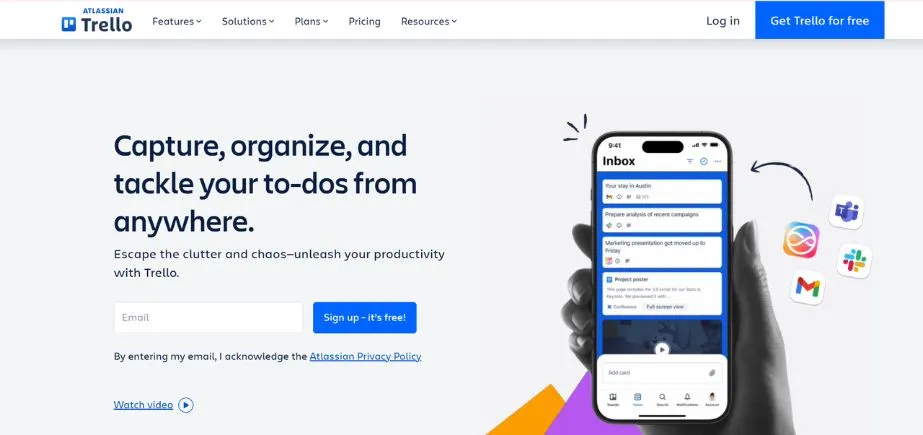
Trello is a graphical project management application which must be in any list of Essential Startup Tools and Software. Trello allows you to plan tasks using a Kanban board style, in which the tasks are presented as cards passing through various phases. You are able to make project boards, add team members, assign due dates and add files. The drag-and-drop interface is highly user-friendly to the extent that one can learn within a few minutes. Trello is ideal when dealing with startups since it is a clear visual representation of what should be done, what should be in progress and what should be done.
Key Features
- Draggable card visual Kanban boards.
- Task checklists and task due date.
- Teamwork work commenting, and adding attachments.
Pros
- Very user-friendly and simple to acquire.
- Free plan adequate to small teams.
- Great visual of all projects
Cons
- Minimal functionality on the free version.
- Does not suggest itself to intricate project management.
- It may be filled with numerous boards.
Best For: Tasks
Pricing: Free plan available; Paid plans start at $5 per user per month
Website: https://trello.com
4. ClickUp
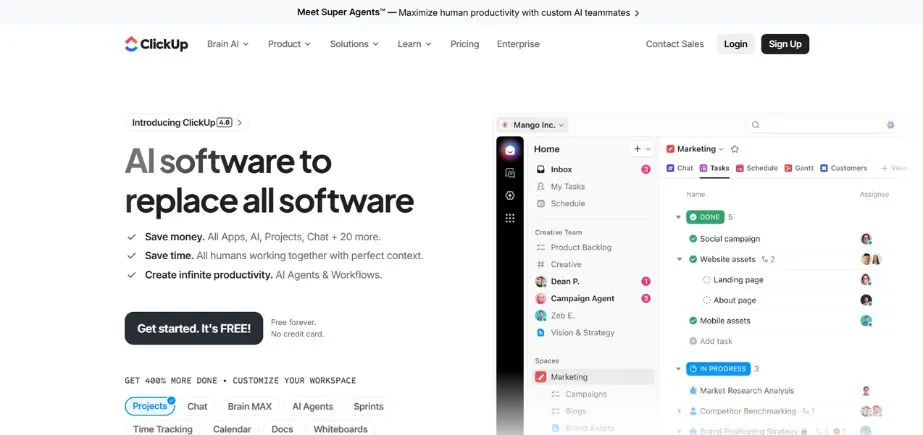
ClickUp is a project management tool that integrates activities, documents, objectives, and time management into a single tool. Being one of the most complex Essential Startup Tools and Software, ClickUp should replace various tools to offer one. You are able to see your work in various formats such as lists, boards, calendars or Gantt charts. ClickUp has such strong features as custom automations, recurring activities, dependencies, and extensive reporting. It is not as easy to learn as some simpler tools, but the richness of the features makes it useful for growing startups.
Key Features
- Various display features, such as boards and lists.
- Ad hoc automations of monotonous workflow Processes.
- Constructed in documentation and goal management capabilities.
Pros
- Free very comprehensive feature set.
- Very flexible to suit your workflow.
- Effortlessly substitutes a number of tools individually.
Cons
- Possible to be overwhelming to new users.
- Several features take time to master.
- Large projects slow down performance.
Best For: Management
Pricing: Free plan available; Paid plans start at $7 per user per month
Website: https://clickup.com
Read More: Best EdTech Startups
5. HubSpot CRM
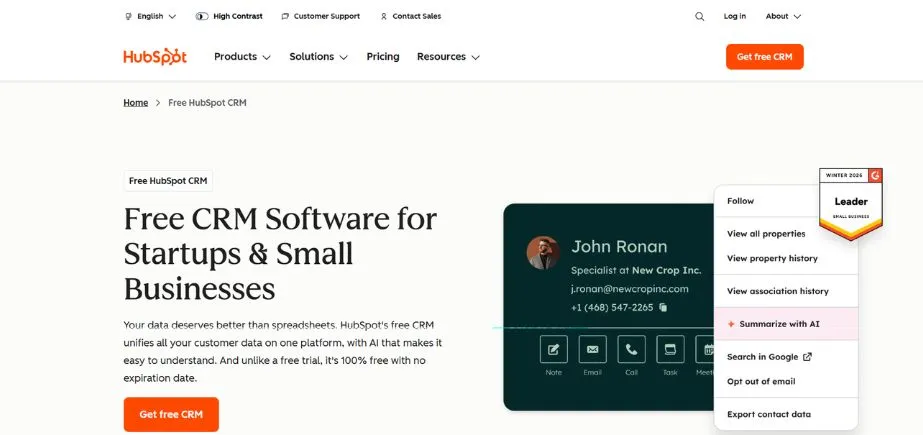
HubSpot CRM is an online customer management application that has gained its status among the startup software that is a necessity in sales and marketing. The free edition is surprisingly well endowed in its ability to track leads, deal management, and arrange customer contacts. HubSpot allows viewing your whole sales pipeline at a glance, where deals move through various phases. Emails, calls, and conference meetings can be logged automatically, and a history of the communications with the customer is kept. The system contains email marketing features, which entail transmitting newsletters and campaigns within HubSpot.
Key Features
- Contact and lead management database management system.
- Visual deal tracking Sales pipeline.
- Email marketing and campaign management solutions.
Pros
- Free plan with basic features, which are generous.
- Very easy to learn for a novice.
- Exquisite learning materials and neighbourhood services.
Cons
- The sophisticated functions demand costly subscriptions.
- It may turn out to be expensive to scale.
- It has a limited amount of reporting in the free version.
Best For: Sales
Pricing: Free plan available; Paid plans start at $50 per month
Website: https://hubspot.com
6. Canva
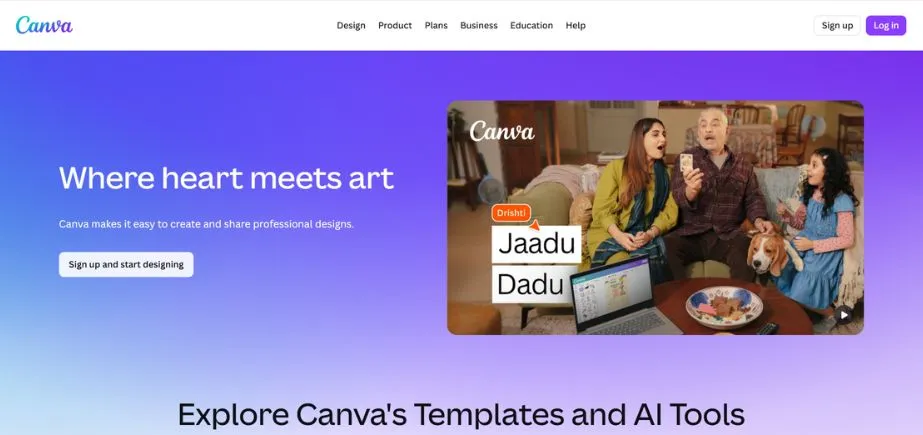
Canva is a graphics design system that has transformed the way startups design visual content. Being among the most used Essential Startup Tools and Software to market with, Canva enables any person to create graphics that have the appearance of a professional one without being a designer. The site has thousands of templates in the form of social media posts, presentations, flyers, business cards, etc. All you have to do is tick a template, edit colours and text and save your design. Canva also offers a big collection of stock images, icons and fonts. The drag-and-drop interface is so easy that you can make a social media post within minutes.
Key Features
- Everything has thousands of customizable templates.
- Drag and drop interface is simple to design.
- Massive store of images and graphics.
Pros
- No design ability whatsoever.
- The free version is highly competent for startups.
- Produces regular branded content easily in a short time.
Cons
- Templates may resemble other ones.
- It has limited access to templates in the free version.
- A paid subscription is needed for advanced features.
Best For: Design
Pricing: Free plan available; Paid plans start at $12.99 per month for individuals
Website: https://canva.com
7. QuickBooks
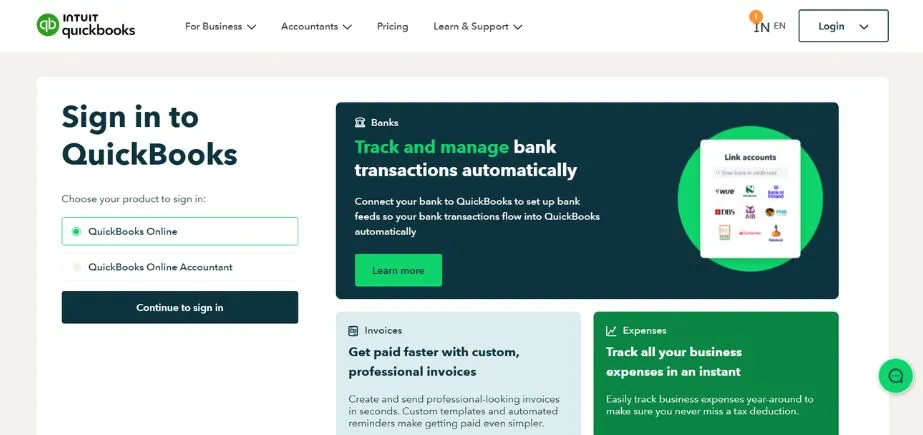
QuickBooks is the accounting program used most globally and is an important element of any top 2026 list of startup tools. The service is used to assist startups in invoicing, expenses, payroll and tax preparation. QuickBooks is also integrated with your bank accounts and credit cards, which automates the importation of transactions and classifies expenses. You will be able to make and send professional invoices to the clients, monitor their payments, and give automatic payment reminders. The software produces significant financial reports, such as profit and loss reports, as well as balance sheets.
Key Features
- Invoicing and payment tracking systems are automated.
- Tracking of expenses using bank accounts.
- The support of financial reporting and tax preparation.
Pros
- Global relied on accounting software in the industry.
- Small business finances in detail.
- Superior on-demand mobile application.
Cons
- None of such plans is free at the moment.
- Initially can be complicated with beginners.
- The price is higher with additional features required.
Best For: Accounting
Pricing: Plans start at $30 per month
Website: https://quickbooks.intuit.com
8. Razorpay
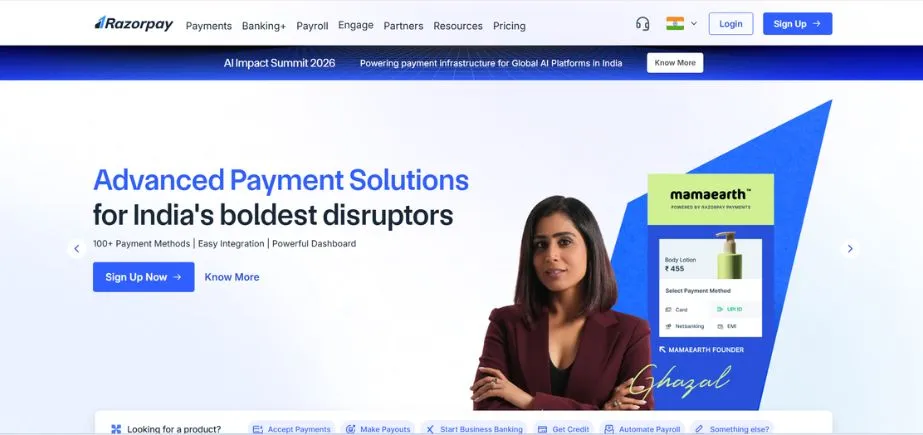
Razorpay is the best payment gateway in India and should be included in the list of Essential Startup Tools and Software used by businesses in India and neighbouring countries. The platform has a volume of payment (annual volume) exceeding $180 billion, and the majority of Indian unicorn startups trust it. Razorpay enables companies to receive payments in the form of credit cards, debit cards, UPI, digital wallets, and net banking. The platform is a full payment platform that has APIs, checkout pages, payment links and subscription billing. In the case of startups that sell their products or services online, Razorpay makes it easy and secure to get payments.
Key Features
- Takes all payment methods of Indians.
- Easily complete API in custom integrations.
- Tracking of all transaction history dashboard.
Pros
- India has a market leader that is widely trusted.
- Accepts any local payment method fully.
- Good documentation and support team.
Cons
- Only concentrated on the Indian market.
- There are transaction charges that are levied on payments.
- Poor international capabilities.
Best For: Payments
Pricing: Free to set up; Transaction fees of 2% per transaction
Website: https://razorpay.com
9. Zapier
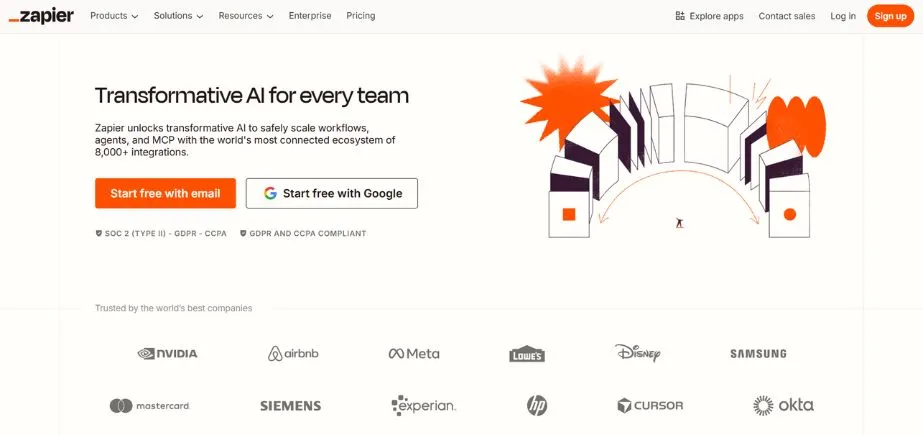
Zapier is an automation platform which links various applications and automates processes without any programming. Being one of the strongest Essential Startup Tools and Software to be productive, Zapier integrates with more than 5000 web applications. You make those “Zaps” that automatically activate actions, such as automatically adding newly subscribed emails to your CRM or making Trello cards when someone submits a form. This removes repetitive manual work, which is a waste of time. To illustrate, say that one of them completes your contact form, Zapier can automatically put them into your email list, add a task to your project management app, and post a notification to your Slack channel.
Key Features
- Integrates more than five thousand applications.
- No simple triggers automate of codes.
- Available multi-step workflows known as Zaps.
Pros
- Conserves a great deal of time on routine activities.
- Simple to install without any technical knowledge.
- The free plan is sufficient to meet the basic needs.
Cons
- Free without restrictions on tasks.
- Complicated procedures are currently in need of paid plans.
- Some integrations are not reliable sometimes.
Best For: Automation
Pricing: Free plan available; Paid plans start at $19.99 per month
Website: https://zapier.com
10. Google Workspace
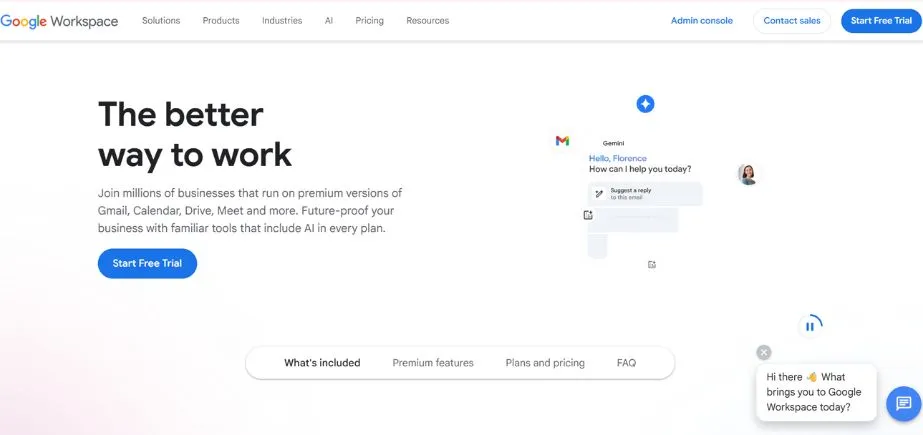
Google Workspace is an all-encompassing productivity tool that comprises Gmail, Google Drive, Docs, Sheets, Calendar and Meet. Being among the most popular Essential Startup Tools and Software, Google Workspace offers all that a startup requires to perform basic business activities. Gmail comes with professional mail using your domain name. The Google Drive offers online storage for all your files with easy sharing. Google Docs and Sheets permit one to collaborate on spreadsheets and documents in real-time. Google Calendar makes the schedule of everyone ordered and synchronized. Google Meet is a video conferencing tool combined with Calendar.
Key Features
- Individual business email using a custom domain name.
- Real-time document collaboration and cloud storage.
- Google Meet integrated video conferencing.
Pros
- Interfacing with the majority of people who are already familiar with.
- Superb cooperation involves a smooth working together.
- Stable and safe infrastructure at the back of it.
Cons
- Subscriptions are necessary for business email addresses.
- Weaker than Microsoft Office at times.
- Google’s user privacy issues.
Best For: Productivity
Pricing: Plans start at $6 per user per month
Website: https://workspace.google.com
How to Choose the Essential Startup Tools and Software
The choice of the appropriate Essential Startup Tools and Software should be considered. Follow these guidelines:
1. Begin With Your Most Necessary Pain: Select the most urgent problems, and those are the ones you should solve first.
2. Free Before You Pay: The majority of the tools have trials to allow you to test beforehand.
3. Integration at the Check Level with other software: Ensure the compatibility of the new software with those you are currently using.
4. Read User Reviews of Other Businesses: Discover what other startups have done with the tool.
5. Think Long Term Costs: You Grow: How does price vary with adding users?
Conclusion
Your Essential Startup Tools and Software needs will evolve as your startup evolves. Periodically re-examine your tool stack in order to make sure that you are getting the most successful solutions. There is nothing to be afraid of changing tools in case something is not working well with your team. In case you require assistance in implementing these tools or you need your own integrations, then you may think of hiring professional developers. There are some tools and software that are necessary to start up, but they must be configured and included in your down-to-business process. It is professionally configured so that you are able to maximise your investments in technology.
The list of startup tools 2026 at the bottom offers a good first step. These tools will allow you to get down to what is important, which is creating a great product and developing your business. The correct Essential Startup Tools and Software simplify all the processes, such as running your team and serving your customers.
FAQs
1. Which are the most critical start-up tools required by any business?
Any start-up will require communication tools, such as Slack, project management, such as Trello, customer management, such as HubSpot CRM, accounting, such as QuickBooks, and automation, such as Zapier. These Startup Tools and Software Essentials are basic operations of any business.
2. Do good free startup tools exist in 2026?
Indeed, there are numerous Essential Startup Tools and Software with generous free plans. Slack, Trello, HubSpot CRM, Canva, and Zapier all offer a free version that would be suitable for small teams. You will be able to begin without any expenses and upgrade in the future as you develop.
3. What number of tools will a start-up really require?
In order to run efficiently, most startups require 5-10 Essential Startup Tools and Software. This usually consists of one communication, project management, marketing, financial and productivity tools. Avoid overloading the tool with the selection of multi-purpose platforms.
4. What are the startup tools that are well integrated?
The future best startup tools are those that are integrated. Slack integrates with Trello, Google Workspace, and the majority of other applications. Zapier has the capability of joining virtually any two tools. Integration capabilities should be the first to look at when selecting Essential Startup Tools and Software.
5. How do startups know when to upgrade from free to paid plans?
Go Pro on reaching the restriction of the free versions, like user limit, storage limit, or features needed. The majority of the Essential Startup Tools and Software will easily tell you when it is time to upgrade. This normally happens when the team you are working with becomes larger than 5-10 individuals.
Continue Exploring: Best Digital Marketing Courses in Trivandrum
