
When it comes to accounting software, much like a business partner, the best Accounting Software Alternatives to QuickBooks to use in your business must be the one that knows your needs, will expand with you and will simplify your financial life and not complicate it. Nowadays, business owners are overwhelmed with a plethora of different accounting software that claim to be the ultimate financial management tool.
There is no such thing as the ideal accounting software that is a one-size-fits-all solution. What works (marvelously) with a freelance graphic designer might fail (abjectly) with a growing manufacturing firm, and what pleases a tech startup might exasperate a brick-and-mortar retailer. The search is not about identifying the most objective best software; what this is about is identifying the solution that is optimally suited to your business size, industry needs, budget, and growth path.
Contemporary businesses do not need simple bookkeeping features. The current accounting software needs to be capable of seamlessly integrating with other business solutions, delivering real-time financial information, being mobile accessible, and being able to scale well as business operations grow. The software must be automated in order to eliminate manual data entry, must have strong reporting features, and must ensure the security levels that are required to safeguard sensitive financial data.
It is a hard task to sift through the marketing promises and feature lists and see which capabilities are actually relevant in your particular circumstance. There are those businesses that require sophisticated inventory management and those that require sophisticated project tracking or multi-currency. Knowing these special needs is the basis of making a wise choice that will do your business good in the present and in the future.
Why Consider Alternatives to QuickBooks?
Although QuickBooks is a giant in the accounting software industry, its prices and restrictions force many companies to explore the possibility of using other Accounting Software Alternatives to QuickBooks, such as Wave and Zoho Books.
Budget Constraints
QuickBooks may be costly, particularly when there is more than one user, payroll, or advanced reporting. Expenses are accumulated very fast, and small businesses are strained. Free solutions, such as Wave, or less expensive solutions such as Zoho Books, allow startups to reinvest savings into growth considerations such as marketing or equipment.
Scalability Limits
When companies become larger, QuickBooks does not always manage the complex reporting, audit trails, multi-entity work, and inventory. Growing enterprises would feel that it is too limiting.
User Experience
The interface of QuickBooks may end up overwhelming non-accountants. Such tools as FreshBooks are aimed at simplicity, and the teams can handle finances without major learning curves.
Control and Data Ownership
QuickBooks Desktop is a product that enables complete control over a file, whereas QuickBooks Online is a product that depends on the usage of cloud storage, which makes the data ownership, customization, and continued expenses questionable. There is also a risk of security problems in the older versions of the desktops without updates.
Industry-Specific Needs
QuickBooks is a general accounting package that is not extensively industry-specific, and in many cases, specialized tools are more appropriate, particularly in the construction, manufacturing, or retail industries.
Read More: Top FreshChat Alternatives
Top 10 Accounting Software Alternatives to QuickBooks
1. Xero
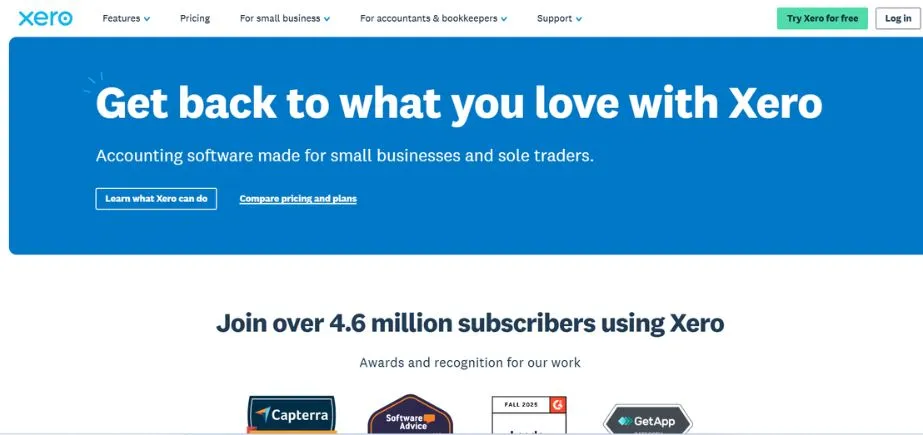
Xero is a prominent accounting software solution established on the cloud and a provider for small and medium businesses. It streamlines invoice, payroll, inventory management, and bank reconciliation, making the financial tracking in real time. It supports multiple currency transactions and has a plug-and-play feature that allows it to integrate with third-party apps, meaning more than 1,000 third-party apps. It also has an intuitively easy-to-navigate dashboard for both the business owners and accountants. The collaboration tool on Xero also highlights the ability of multiple people to work on financial data with ease, making it perfect for growing and international businesses. This is one of the best Accounting Software Alternatives to QuickBooks.
Who’s it for?
Small to midsize businesses wanting a user-friendly accounting tool.
Key Features:
- Inventory management to track stock
- On-time bill payment reminders
- Professional, fast invoicing
- Payroll integration for accurate employee payments
- Simple dashboard for easy navigation
What Makes It Unique?
Robust multi-currency support for international transactions.
Pricing:
- Early: $25/month
- Growing: $40/month
- Established: $54/month
- Free trial + 50% off for 3 months (US only).
2. Invoicera
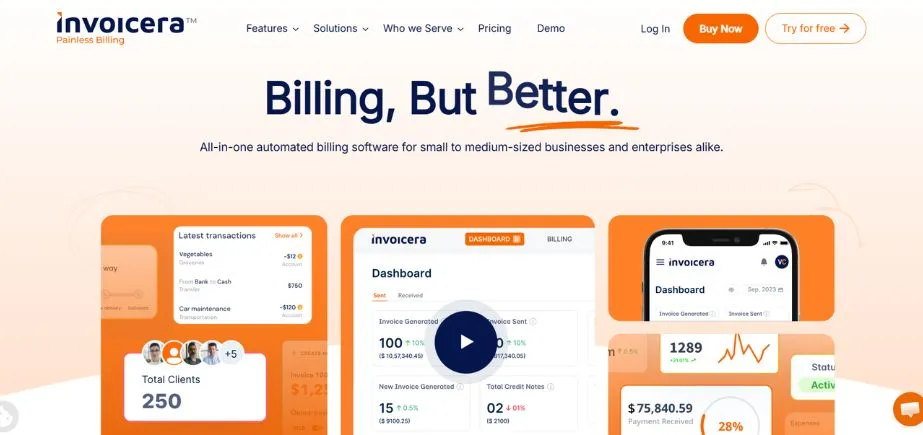
Invoicera is an extensive invoicing/billing application that is applicable to small, medium, and large businesses. It provides the option of a custom invoice, automated recurrent billing, time tracking, and multi-currency. The software eases the expense tracking and approval processes, making them less prone to review mistakes and wastage of time. Invoicera can be seamlessly engaged with various payment gateways, which enables businesses to receive financial transactions from customers across the globe. Platform automation features and capabilities optimize the financial operations of freelancers, small-scale, and large corporations.
Who’s it for?
Companies needing tailored invoicing and integrated financial management.
Key Features:
- Custom branded invoices
- Accurate time tracking for projects
- Centralized expense management hub
- Multi-level security system
- Workflow automation for efficiency
- 14+ payment gateway integrations
What Makes It Unique?
Highly customizable workflow automation designed for unique business needs.
Pricing:
- Starter: ₹2499/year
- Business: ₹4999/year
- Enterprise: ₹9999/year
- Infinite: ₹14999/year
- Free plan also available.
3. FreshBooks
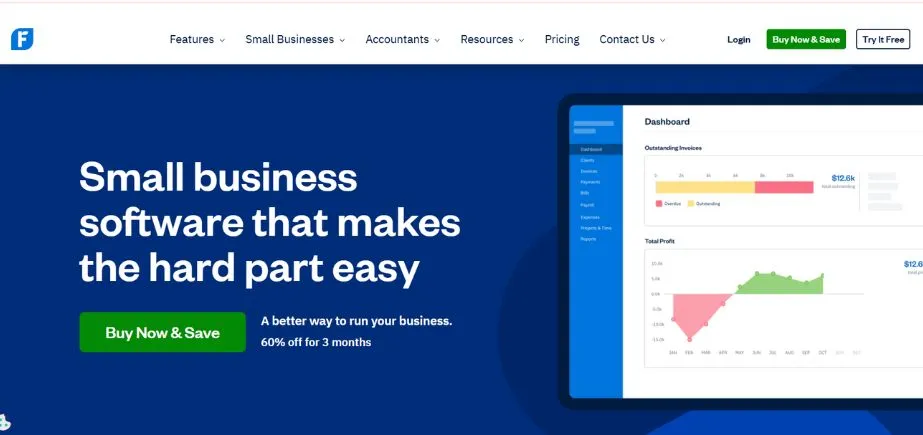
FreshBooks is accounting-based software that was designed with freelancers, startups, and small businesses in mind. It simplifies time tracking, expenditure tracking, invoicing, and double-entry bookkeeping. Among its noticeable functions, the capacity to automatically convert tracked hours into invoices has to be mentioned, and it helps the user to be paid quickly. FreshBooks is also a good source of reporting financial insights and integrates with tools like Stripe, PayPal, and Gusto. Its mobile application provides on-the-move convenience, which gives business owners the capability to make financial transactions on the move.
Who’s it for?
Freelancers and small service-based businesses.
Key Features:
- Track time and convert hours into invoices
- Create professional invoices quickly
- Expense and cost tracking
- Dashboard with key financial insights
What Makes It Unique?
Double-entry accounting, ensuring accurate and compliant bookkeeping.
Pricing:
- Lite: $8.50/month
- Plus: $15/month
- Premium: $27.50/month
- Exclusive: 50% off for 6 months + 30-day money-back guarantee.
4. Zoho Books
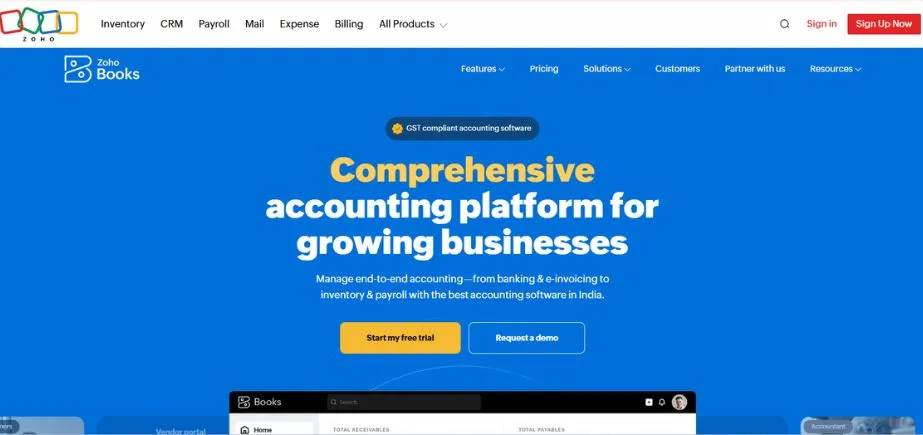
Zoho Books is a comprehensive accounting solution that is able to handle more than invoices, perform expenses tracking, project billing, and reconciliation of a commercial bank account. It is an element of the Zoho ecosystem, so it integrates with Zoho CRM, HR, and inventory add-ons to provide a one-stop business solution. Zoho Books also gives role-based access so that the teams can collaborate securely. Detailed reporting related to financial reporting and automation functionalities makes this application beneficial to businesses to help them stay compliant and streamlined. It is versatile and thus a good option for both small businesses and larger organizations.
Who’s it for?
Small businesses looking for intuitive, automation-friendly accounting.
Key Features:
- Automated workflows to reduce manual tasks
- Strong inventory management tools
- Banking integrations and APIs for easy sync
What Makes It Unique?
Extensive integration ecosystem with Zoho apps and third-party tools.
Pricing:
- Standard: ₹1300/month
- Professional: ₹2100/month
- Enterprise: ₹3000/month
- Ultimate: ₹3200/month
- Save up to 34% with annual plans.
5. Wave
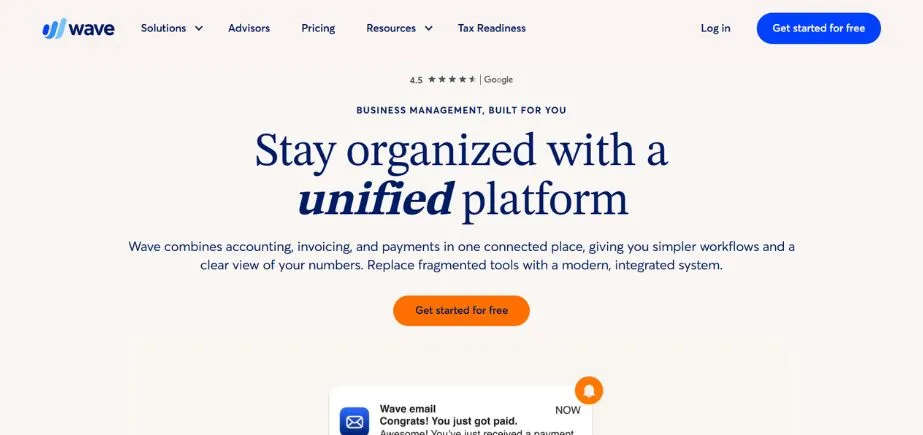
Wave is a free accounting software created to serve freelancers and the proprietors of small businesses. It offers unlimited invoicing, expense tracker, and financial reporting free of cost. The straightforward format of Wave and its easy-to-navigate interface make it user-friendly even to laypeople. The platform has an additionalнд cost-saving benefit of bank synchronization and scanning receipts through the mobile application through its mobile application, which increases convenience. Respective paid features, such as payroll and payment processing, can be added as a business scale, ensuring that Wave does not grow beyond the reach of a startup business.
Who’s it for?
Freelancers, solopreneurs, and startups on tight budgets.
Key Features:
- Free invoicing with basic features
- Simple bookkeeping and reports
- Receipt scanning for easy record-keeping
- User-friendly design for beginners
What Makes It Unique?
Offers completely free accounting and invoicing, charging only transaction fees.
Pricing:
- Invoicing & Accounting: Free
- Payment processing: Small per-transaction fee
6. Sage
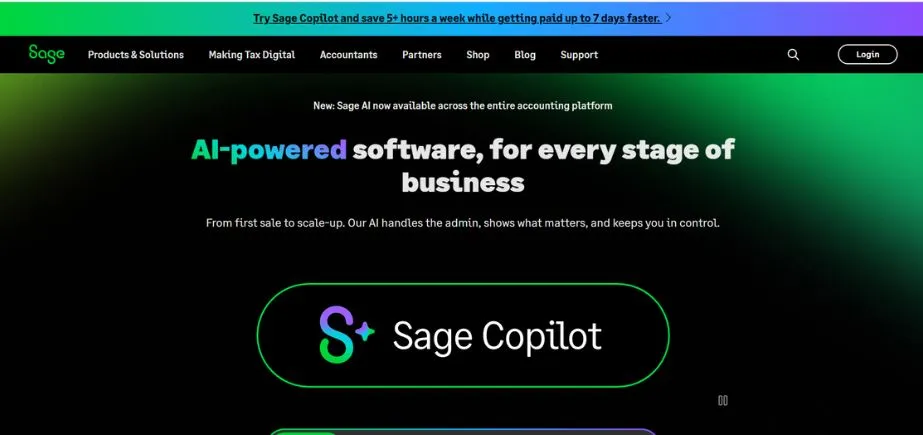
Sage is a known accounting software solution used by medium and small-sized businesses. It includes powerful tax compliance, payroll, inventory, and cash flow functionality. Sage provides good reporting and analytic tools to help in financial decision-making. Available in the form of cloud and desktop applications, it can suit different business-focused needs. The industry-specific modules enable customization in specific markets, including retail, manufacturing, and construction industries, so it is an adaptable choice for a range of business operations.
Who’s it for?
Small, medium, and large businesses with advanced needs.
Key Features:
- Accounts receivable/payable management
- Integrated payroll functionality
- Advanced reporting & analytics
- Time and inventory tracking
What Makes It Unique?
Powerful analytics and forecasting tools for enterprise decision-making.
Pricing:
- Pro: $58.92/month
- Premium: $96.58/month
- Quantum: $160/month
- ~16% off with annual plan.
Explore More: Best Dopebox Alternatives
7. Tally Solutions
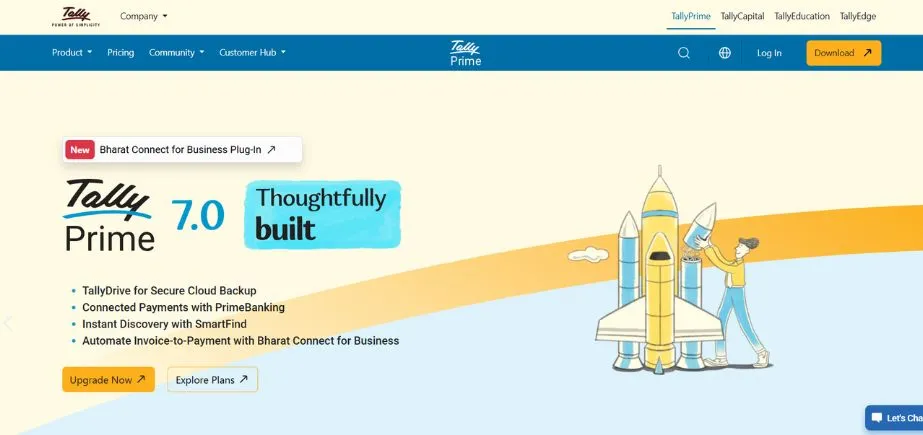
Tally Solutions is an Indian accounting software considered to be both simple and reliable. It addresses key domains including financial accounting, inventory management, GST compliance, and payroll. The latest version, TallyPrime, comes with new features like remote access as well as improved navigation and automation. It supports multiple languages, which opens it to many users. Relied upon by SMEs, Tally is one of the applications that companies can refer to when it comes to accounting and compliance handling. This is one of the most recommended Accounting Software Alternatives to QuickBooks.
Who’s it for?
Businesses operating in GST-regulated regions.
Key Features:
- End-to-end accounting and finance management
- Automated GST compliance
- Inventory tracking and POS support
- Multilingual system support
What Makes It Unique?
Renowned for robust GST compliance, ensuring error-free tax reporting.
Pricing:
- Silver Rental: ₹600/month
- Silver: ₹18000 one-time
- Gold Rental: ₹1800/month
- Gold: ₹54000 one-time
8. Finly
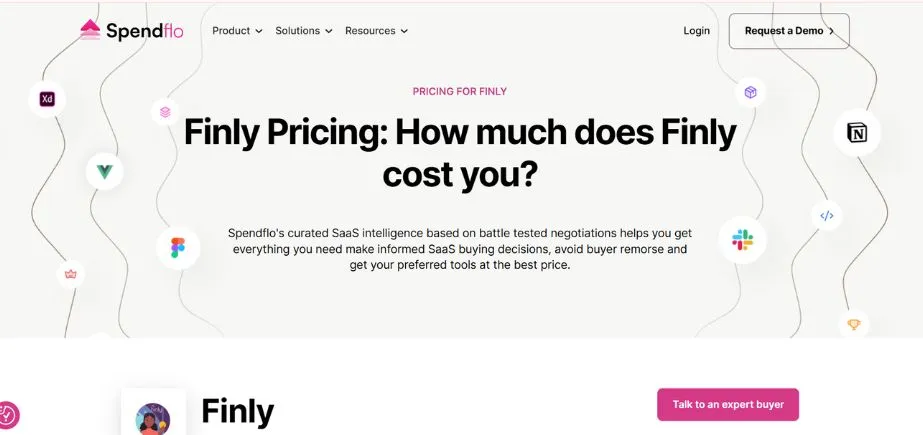
Finly is an expense management and accounting automation solution that is designed to make corporate financial procedures less troublesome. It enables companies to monitor their expenditure, keep up with invoices, and automate the authorization process. Finly, it can provide business leaders with real-time analytics of the spending of the companies as well as the opportunity to streamline budgets. It can also be connected to the ERP and accounting systems to allow ease of operations. It comes with features such as prepaid cards issued to employees as well as reimbursement tracking, making it particularly effective among mid-sized and large organisations, which require efficiency.
Who’s it for?
SMEs and large enterprises needing streamlined workflows.
Key Features:
- Automated billing process
- Multi-level approval workflows
- Expense and reimbursement management
- Vendor database management
- ERP system integration
What Makes It Unique?
Advanced expense automation that simplifies reporting and approvals.
Pricing:
Custom pricing available via sales team.
9. Patriot Accounting
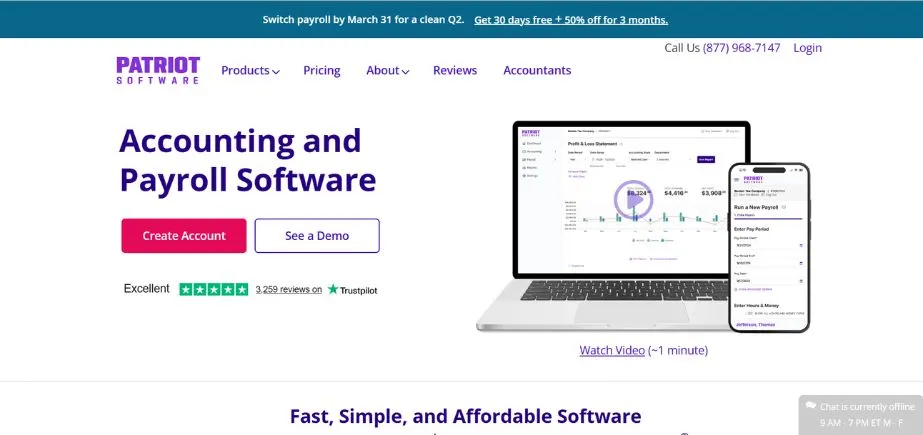
Patriot Accounting is a simple yet powerful online accounting software designed for small businesses. It focuses on providing easy bookkeeping tools with an affordable pricing model. The software allows businesses to create invoices, track expenses, manage cash flow, and generate key financial reports without the complexity of enterprise solutions. It integrates seamlessly with Patriot’s payroll service, making it an ideal all-in-one solution for businesses that need both accounting and payroll functionalities.
Who’s it for?
Small businesses and startups seeking affordable, straightforward accounting with optional payroll integration.
Key Features:
- Easy invoice creation and payment tracking
- Cash-basis and accrual-basis accounting options
- Bank reconciliation for accurate records
- Financial reporting tools for insights
- Integration with Patriot Payroll for end-to-end management
What Makes It Unique?
Budget-friendly accounting solution with optional full-service payroll integration in one platform.
Pricing:
- Accounting Basic: $20/month
- Accounting Premium (includes more features): $30/month
- Free setup and no long-term contracts
10. Kashoo
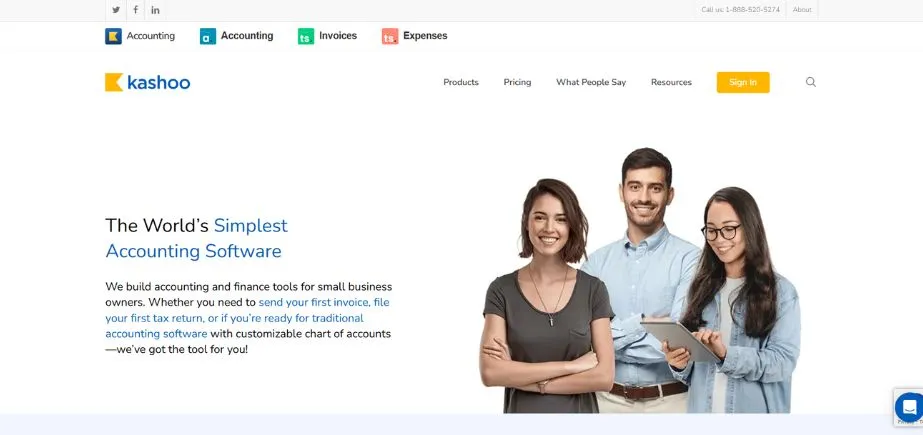
Kashoo is an easy-to-use but highly functional accounting software that is freelance and small business friendly. It has automated bank feeds, expense categorisation, and tax-ready reporting. It uses a smart machine learning engine that classifies transactions without laborious manual input. Kashoo allows unlimited users, enabling seamless collaboration across teams. Supporting multiple currencies, it caters to global business needs. Kashoo is designed to be easy to use, gives responsive customer service, and is a very functional tool to manage small business finances.
Who’s it for?
Freelancers and small businesses preferring straightforward accounting.
Key Features:
- Automated expense tracking
- Simple invoicing and payment acceptance
- Real-time bank feeds and reconciliation
- Multi-currency invoicing
What Makes It Unique?
Minimalist, easy-to-learn interface that saves time for non-accountants.
Pricing:
- Trulysmall Invoices: $0/month
- Trulysmall Accounting: $20/month
- Kashoo Plan: $30/month
Making the Right Choice
To make the correct decision on the Accounting Software Alternatives to QuickBooks, the business requirements, growth strategies, and the complexity of the operations must be considered because the outcome affects the working processes, financial exposure, and scalability.
Assess Current and Future Needs
Document pain points QuickBooks is not resolving and foresight needs along the lines of multi-entity, advanced inventory, or industry-specific needs. Applications such as Zoho Books are distinguished by scalability and the ability to use them in the mobile version.
Integration
Verify the links between alternatives and CRM, e-commerce, payroll, and other tools. Computer-based programs tend to have weaker integrations as compared to those provided by cloud-based solutions.
Implementation and Training
Less complex tools, such as Wave or FreshBooks, take minimal time to set up, and more complex tools, such as Sage Intacct, require more time to implement and train. Balance ease of use with long-term flexibility.
Total Cost of Ownership
See past subscription fee to consider users, premium features, integrations, training, migration, and support. A free platform can be expensive, and more expensive sites can prove more valuable in general.
Test Before Committing
Test it with the real workflows, including team members, and weigh the advantages and disadvantages to make a wise decision.
Conclusion
An overview of the Accounting Software Alternatives to QuickBooks will enable businesses to identify the solution that is more appropriate to their needs and budget, as well as their growth objectives. Most, but not all, people like QuickBooks, but the current accounting programs provide better user interfaces, industry-related features, and scalability. Bench.co is doing better work in automating the accounting of entrepreneurs, whereas others are doing better in mobile access, integrations, or enterprise scalability.
The trick lies in selecting a platform that aligns with your workflows and that allows you to grow, whether you are more cost-minded, more functional, more specialized, or more simple. Taking time to analyze and test options has the potential to increase efficiency, financial transparency, and minimize expenses. Finally, the ideal software is the one that simplifies financial management, makes it efficient, and is in line with your business goals.
FAQs
1. What are the best Accounting Software Alternatives to QuickBooks to use by a small company?
Zoho Books, Wave, FreshBooks, Bench.co, and Xero are the most popular ones, and each of them has its own set of features, such as automation, mobile access, and affordable plans.
2. What accounting software is the most appropriate when you are a freelancer or solopreneur?
Freelancers and small businesses are best suited to use Wave and FreshBooks because of their simplicity, low cost, and easy installation.
3. Am I able to change software easily in case I want to leave QuickBooks and use a different software?
Yes, most platforms also provide data migration tools or support to assist in the transfer of your financial data; however, planning and testing can be advised to prevent disruptions.
4. What software do you recommend for specific needs?
Zoho Books, Xero, and Bench.co serve the specific industries with such functions as inventory control, multi-entity, and automatic bookkeeping.
5. Are desktop versions superior to cloud-based?
Cloud-based solutions are more accessible, real-time updated, and integrated, whereas the desktop versions provide more control of local data. Your preference will be based on security, convenience, and scalability.
Continue Exploring: Top Adobe Creative Cloud Alternatives
